Laser welded assemblies

Laser welding is a precision manufacturing technique widely used in the production of medical devices, including those made from stainless steel, nitinol, and components like marker bands.
It leverages a focused laser beam to join materials with minimal heat-affected zones (HAZ), high accuracy, and excellent repeatability—attributes critical for medical applications where reliability, biocompatibility, and tight tolerances.
Our laser welding capability offers exceptionally high levels of consistency, controlled levels of penetration, fine weld seams, fast processing speeds and reduced heat input with little or no distortion.
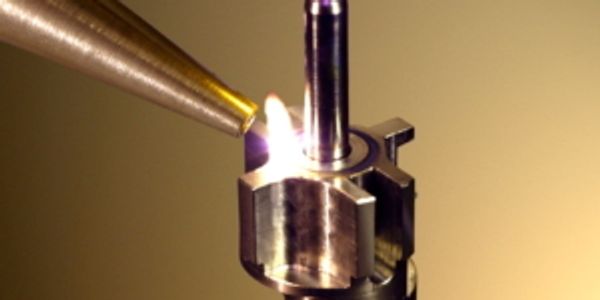
Our set-up allows long tubes, rods or wires to be welded together, as well as discrete micro-components.
Typical examples of applications are miniature gears welded to shafts, sensor casings, garter springs, micro-actuators, micro-probes, orthopedic and surgical tools, ophthalmic needles.
Small Precision Items
Small Precision Items
Small Precision Items

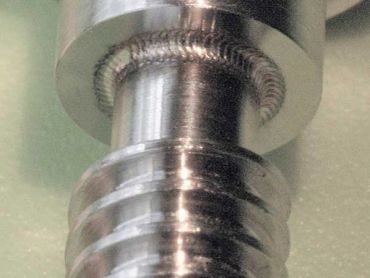
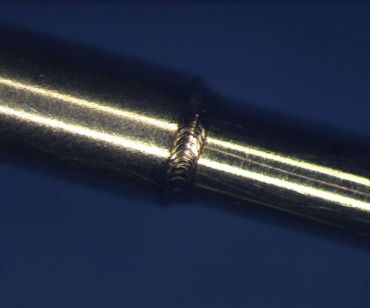
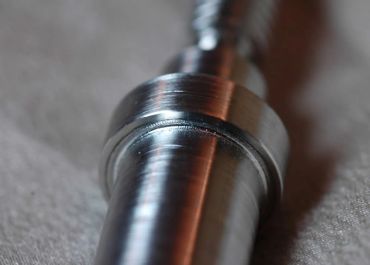
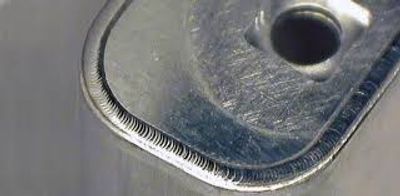
Laser welding is ideal for welding small precision items. Unlike electron beam welding or vacuum brazing, a vacuum is not required for laser welding. Our 100W pulse Nd:YAG laser processing system allows us to weld rotary seams as well as spot welds and butt welds. Inert gas is used to shield the molten metal from oxidation during laser welding, resulting in a bright, strong, clean weld.
Weld seams can be as small as 0.1mm wide, resulting in a spatter-free clean weld area.
Laser Welding Modes
Small Precision Items
Small Precision Items
There are three basic weld modes, which correspond to the peak power density within the focus spot: conduction mode, transition mode, and penetration or keyhole mode. It can be seen that keyhole mode provides a far deeper weld, and is the most useful mode for welding for example thin foils together into a “sandwich”. Conduction and Transition modes remain potentially strong due to the weld overlap which occurs, whereby subsequent weld spots overlap between 70% and 90%, rendering a continuous weld bead.
laser welding role in medical devices
Medical Devices
Laser Welding Stainless Steel
Laser Welding Stainless Steel

Medical devices demand welds that are strong, clean, and free of contaminants, as they often operate in the body or undergo sterilization. Laser welding excels here due to:
Precision: Spot sizes as small as 0.1 mm allow welding of micro-components like marker bands or stent struts.
Minimal Thermal Impact: Reduces distortion or annealing in heat-sensitive materials like nitinol, preserving shape memory or superelasticity.
Hermetic Sealing: Creates leak-tight joints for implants or fluid-carrying devices (e.g., catheter ports).
No Filler Material: Direct fusion avoids introducing foreign substances, maintaining biocompatibility.
Laser Welding Stainless Steel
Laser Welding Stainless Steel
Laser Welding Stainless Steel
Stainless steel (e.g., 316L, 17-4 PH) is a staple in medical devices like surgical tools, hypotubes, and older stent designs.
Applications: Joining hypotube segments in catheters, attaching stainless steel marker bands, or assembling orthopedic implant components (e.g., plates to screws). We also weld arterial cannula for superior strength.
Advantages
Strong, corrosion-resistant welds match the base material’s properties.
Precise control prevents burn-through on thin-walled structures (e.g., 0.1 mm thick hypotubes).
Laser Welding Nitinol
Laser Welding Stainless Steel
Laser Welding Nitinol
Nitinol’s unique properties (shape memory, super elasticity) make it trickier but highly valuable for laser welding in devices like stents or guidewires:
Applications: Welding nitinol stent struts, attaching marker bands (e.g., Pt-Ir to nitinol), or joining nitinol to other metals in hybrid assemblies.
Advantages
Small HAZ preserves nitinol’s phase transformation properties, critical for functionality.
Clean welds avoid nickel leaching, maintaining biocompatibility.
Laser Welding Benefits for Medical Devices
Laser welding can be promoted as a joining technology that supports the key demands of modern medical device manufacturing: miniaturization, cleanliness, automation, strength, repeatability and regulatory control. It is especially valuable where conventional joining methods, such as soldering, adhesive bonding or mechanical crimping, may introduce contamination, add bulk, reduce strength or limit design flexibility.
A strong positioning statement could be:
Laser welding enables precise, clean and repeatable joining of miniature medical components, helping manufacturers produce safer, smaller and more reliable devices for minimally invasive and implantable applications.
Stents and vascular implants
Laser welding can be used to attach radiopaque marker bands, join fine struts, or assemble complex nitinol and stainless steel stent structures. The process supports small, high-strength joints while preserving flexibility and device performance.
Catheters and guide catheters
Laser welding is useful for joining stainless steel hypotubes, marker bands, pull wires, braid-reinforced sections and distal tip components. It helps improve pushability, torque control, trackability and visibility during minimally invasive procedures.
Guidewires and delivery systems
Laser welding can join fine wires, coils, sleeves and tip assemblies with excellent precision. This is valuable where smooth transitions, flexibility and fatigue resistance are required.
Endoscopic and laparoscopic instruments
Small surgical tools, shafts, jaws, cutting elements and actuating mechanisms can be laser welded to create strong, clean joints without excessive heat distortion. This supports miniaturized instruments used in minimally invasive surgery.
Orthopedic implants and instruments
Laser welding can be used on titanium, stainless steel and cobalt-chromium components in surgical instruments, fixation devices and implant sub-assemblies. It is useful where strength, cleanliness and repeatability are critical.
Pacemakers and implantable electronics
Hermetic sealing of implantable device housings is a strong application for laser welding. The process can create precise, leak-tight welds around titanium casings used in pacemakers, neurostimulators and other active implantable devices.
Sensor and diagnostic devices
Laser welding can be used to assemble miniature sensors, diagnostic probes, pressure sensors and monitoring devices. It enables precise joining of delicate components while limiting thermal damage.
Needles, cannulas and drug-delivery devices
Laser welding can join small tubes, tips, sleeves and actuator components in needles, auto-injectors, insulin delivery systems and infusion devices. It provides clean, repeatable welds suitable for high-volume production.
Dental and maxillofacial devices
Laser welding can be applied to orthodontic appliances, dental implant components, bridges and surgical guides where small, accurate and biocompatible joints are required.
Surgical robotics and micro-instruments
Robotic surgical tools often contain very small moving parts, cables, shafts and end-effectors. Laser welding supports compact, reliable assemblies with minimal distortion, making it well suited to next-generation robotic and microsurgical devices.
example components

Laser Welded Barb Assembly
Hypodermic Needle to Ferrule Laser Weld
Laser Welded Barb Assembly
Tibbs Arterial Cannula
Hypodermic Needle to Ferrule Laser Weld
Laser Welded Barb Assembly
Critical Measurement Sub-Assembly
Hypodermic Needle to Ferrule Laser Weld
Hypodermic Needle to Ferrule Laser Weld