Micro Laser Welding for Medical Devices

Medical device laser welding is a precision manufacturing technique extensively used in the production of medical devices, including those crafted from stainless steel, nitinol, and components like marker bands. This process utilizes a focused laser beam to perform micro laser welding, joining materials with minimal heat-affected zones (HAZ), high accuracy, and excellent repeatability—qualities essential for medical applications requiring reliability, biocompatibility, and tight tolerances. Our advanced stainless steel welding capabilities deliver exceptional consistency, controlled penetration, fine weld seams, fast processing speeds, and reduced heat input, resulting in little or no distortion.
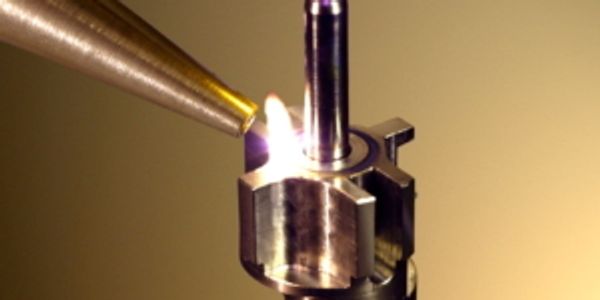
Our set-up allows for the welding of long tubes, rods, or wires, as well as discrete micro-components, making it ideal for medical device laser welding. Typical applications include miniature gears welded to shafts, sensor casings, garter springs, micro-actuators, micro-probes, and orthopedic and surgical tools, all of which often require precise micro laser welding techniques. Additionally, our capabilities are well-suited for stainless steel welding, particularly in the manufacturing of ophthalmic needles.
laser welding
Precision Laser Welding
Precision Laser Welding

Precision laser welding, particularly in the context of medical device laser welding, utilizes a highly focused beam of laser energy to create a small, controlled molten weld pool. This concentrated heat input ensures that narrow welds are formed with minimal distortion while preserving excellent dimensional accuracy.
When compared to conventional welding techniques such as TIG or resistance welding, laser welding offers several key advantages:
- Minimal heat affected zone
- Low distortion
- Excellent repeatability
- High weld strength
- Precise control of weld penetration
- Clean cosmetic finish
- Ability to join extremely small components, making it ideal for micro laser welding applications
These benefits make laser welding particularly suitable for stainless steel welding, especially for components that demand tight dimensional tolerances or high cosmetic standards.
Micro Laser Welding
Precision Laser Welding
Micro laser welding is particularly suited for components measured in millimeters rather than centimeters. This advanced process enables the precise joining of miniature components while maintaining dimensional stability, making it ideal for applications in medical device laser welding. At Paarl Precision, we utilize micro laser welding to create delicate assemblies where traditional welding methods, such as stainless steel welding, are impractical. Common applications include miniature sensors, catheter components, surgical instruments, precision scientific devices, and custom-engineered assemblies. Our innovative process ensures reliable joining of thin materials, minimizing distortion and preserving the mechanical properties of surrounding materials.
Materials We Weld
Stainless Steel - Medical devices, tubing, especially in the context of medical device laser welding and stainless steel welding. Titanium - Surgical instruments. Nitinol - Medical implants, which benefit from micro laser welding techniques. Inconel - Aerospace applications. Nickel Alloys - Sensors. Aluminium - Lightweight components. Copper - Electrical components. Kovar - Electronic packages.
Hypodermic Tube Laser Welding
Hypodermic Tube Laser Welding
Laser welding is widely used for joining hypodermic tubing in medical devices and precision instruments, particularly in applications like medical device laser welding and micro laser welding. The concentrated heat source enables extremely thin-walled stainless steel welding with minimal deformation, ensuring dimensional accuracy.
Typical applications include:
- Catheter assemblies
- Marker band attachment
- Guidewire components
- Surgical instruments
- Fluid delivery systems
- Scientific sampling equipment
The laser welding process produces clean, consistent welds with excellent repeatability, making it ideal for regulated manufacturing environments.
Medical Device Assembly
Hypodermic Tube Laser Welding
Medical Device Assembly
Medical device manufacturers require manufacturing processes capable of delivering consistent quality across prototype development and production. Medical device laser welding supports this by providing precise, repeatable joints with minimal thermal impact on surrounding components. Micro laser welding is particularly effective for creating these delicate connections, especially when working with stainless steel welding for durable designs.
Paarl Precision collaborates with customers developing miniature medical and scientific devices where accuracy, repeatability, and surface finish are critical. We support projects from early-stage development through to production manufacturing, helping customers achieve reliable assemblies for demanding applications.
Industries We Serve
Hypodermic Tube Laser Welding
Medical Device Assembly
Medical Devices
Catheters, implants, surgical instruments, and minimally invasive devices benefit significantly from medical device laser welding techniques that ensure high precision and strong bonds.
Scientific Instrumentation
Laboratory equipment, sensors, analytical systems, and vacuum assemblies often utilize micro laser welding for the delicate assembly of components.
Aerospace
Lightweight precision assemblies for aerospace applications require repeatability and high-quality welds, where stainless steel welding techniques come into play for durability and reliability.
Defence
Miniature precision components in the defence sector depend on robust manufacturing processes, utilizing advanced welding methods to ensure performance under extreme conditions.
Electronics
Sensor housings, hermetic packages, and precision enclosures benefit from meticulous welding techniques, including stainless steel welding, to enhance their functionality and longevity.
Industrial Automation
Precision mechanisms, instrumentation, and custom-engineered components are often crafted with the help of micro laser welding to achieve exceptional quality and performance.
Frequently Asked Questions
Frequently Asked Questions
Frequently Asked Questions
Can you weld very thin tubing?
Yes—micro laser welding is particularly well suited to thin-wall tubing due to its highly localized heat input.
Is laser welding suitable for medical components?
Absolutely, medical device laser welding is widely utilized for miniature medical devices, surgical instruments, and scientific equipment because it delivers precision, repeatability, and low distortion.
What production volumes do you support?
We offer prototypes, low-volume batches, and production runs.
Can you weld dissimilar metals?
The feasibility of laser welding depends on the specific material combination and application.
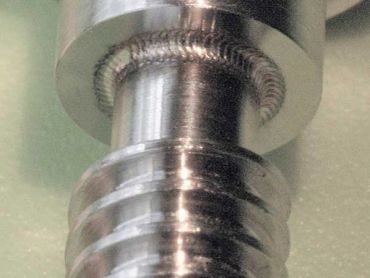
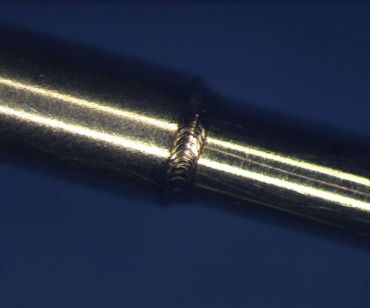
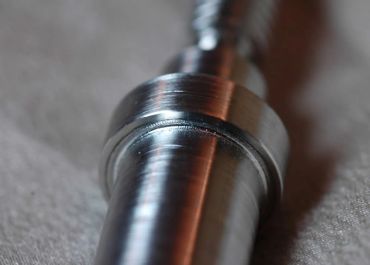
Laser Welding Precision Micro Welding for Medical and Advanced Engineering Components
Laser Welding Precision Micro Welding for Medical and Advanced Engineering Components
Laser Welding Precision Micro Welding for Medical and Advanced Engineering Components

Precision laser welding, particularly in the context of medical device laser welding, utilizes a highly focused beam of laser energy to create a small, controlled molten weld pool. This concentrated heat input ensures that narrow welds are formed with minimal distortion while preserving excellent dimensional accuracy.
When compared to conventional welding techniques such as TIG or resistance welding, laser welding offers several key advantages:
- Minimal heat affected zone
- Low distortion
- Excellent repeatability
- High weld strength
- Precise control of weld penetration
- Clean cosmetic finish
- Ability to join extremely small components, making it ideal for micro laser welding applications
These benefits make laser welding particularly suitable for stainless steel welding, especially for components that demand tight dimensional tolerances or high cosmetic standards.
Laser Welding Modes
Laser Welding Precision Micro Welding for Medical and Advanced Engineering Components
Laser Welding Precision Micro Welding for Medical and Advanced Engineering Components
laser welding role in medical devices
Medical Devices
Laser Welding Stainless Steel
Laser Welding Stainless Steel
Precision laser welding, particularly in the context of medical device laser welding, utilizes a highly focused beam of laser energy to create a small, controlled molten weld pool. This concentrated heat input ensures that narrow welds are formed with minimal distortion while preserving excellent dimensional accuracy.
When compared to conventional welding techniques such as TIG or resistance welding, laser welding offers several key advantages:
- Minimal heat affected zone
- Low distortion
- Excellent repeatability
- High weld strength
- Precise control of weld penetration
- Clean cosmetic finish
- Ability to join extremely small components, making it ideal for micro laser welding applications
These benefits make laser welding particularly suitable for stainless steel welding, especially for components that demand tight dimensional tolerances or high cosmetic standards.
Laser Welding Stainless Steel
Laser Welding Stainless Steel
Laser Welding Stainless Steel
Micro laser welding is particularly suited for components measured in millimeters rather than centimeters. This advanced process enables the precise joining of miniature components while maintaining dimensional stability, making it ideal for applications in medical device laser welding. At Paarl Precision, we utilize micro laser welding to create delicate assemblies where traditional welding methods, such as stainless steel welding, are impractical. Common applications include miniature sensors, catheter components, surgical instruments, precision scientific devices, and custom-engineered assemblies. Our innovative process ensures reliable joining of thin materials, minimizing distortion and preserving the mechanical properties of surrounding materials.
Laser Welding Nitinol
Laser Welding Stainless Steel
Laser Welding Nitinol
Stainless Steel - Medical devices, tubing, especially in the context of medical device laser welding and stainless steel welding. Titanium - Surgical instruments. Nitinol - Medical implants, which benefit from micro laser welding techniques. Inconel - Aerospace applications. Nickel Alloys - Sensors. Aluminium - Lightweight components. Copper - Electrical components. Kovar - Electronic packages.
Laser Welding Benefits for Medical Devices
Laser welding serves as a vital joining technology that meets the essential demands of modern medical device manufacturing, particularly in areas like miniaturization, cleanliness, automation, strength, repeatability, and regulatory control. Its benefits become even more pronounced in applications where conventional joining methods—such as soldering, adhesive bonding, or mechanical crimping—risk introducing contamination, adding bulk, compromising strength, or limiting design flexibility.
A strong positioning statement could be:
Medical device laser welding enables precise, clean, and repeatable joining of miniature medical components, allowing manufacturers to produce safer, smaller, and more reliable devices tailored for minimally invasive and implantable applications.
**Stents and vascular implants**
Medical device laser welding is employed to attach radiopaque marker bands, join fine struts, or assemble complex nitinol and stainless steel stent structures. This technique supports small, high-strength joints while maintaining flexibility and device performance.
**Catheters and guide catheters**
Micro laser welding is ideal for joining stainless steel hypotubes, marker bands, pull wires, braid-reinforced sections, and distal tip components. It enhances pushability, torque control, trackability, and visibility during minimally invasive procedures.
**Guidewires and delivery systems**
Laser welding allows for the precise joining of fine wires, coils, sleeves, and tip assemblies, which is crucial for applications requiring smooth transitions, flexibility, and fatigue resistance.
**Endoscopic and laparoscopic instruments**
Small surgical tools, shafts, jaws, cutting elements, and actuating mechanisms can be effectively laser welded, resulting in strong, clean joints that avoid excessive heat distortion. This is beneficial for miniaturized instruments used in minimally invasive surgery.
**Orthopedic implants and instruments**
Laser welding technology is applicable to titanium, stainless steel, and cobalt-chromium components found in surgical instruments, fixation devices, and implant sub-assemblies, especially where strength, cleanliness, and repeatability are essential.
**Pacemakers and implantable electronics**
The hermetic sealing of implantable device housings is a prominent application for laser welding, enabling the creation of precise, leak-tight welds around titanium casings utilized in pacemakers, neurostimulators, and other active implantable devices.
**Sensor and diagnostic devices**
Laser welding can assemble miniature sensors, diagnostic probes, pressure sensors, and monitoring devices, enabling the precise joining of delicate components while minimizing thermal damage.
**Needles, cannulas, and drug-delivery devices**
Micro laser welding is effective for joining small tubes, tips, sleeves, and actuator components in needles, auto-injectors, insulin delivery systems, and infusion devices, resulting in clean, repeatable welds suitable for high-volume production.
**Dental and maxillofacial devices**
Laser welding technology can be applied to orthodontic appliances, dental implant components, bridges, and surgical guides where small, accurate, and biocompatible joints are crucial.
**Surgical robotics and micro-instruments**
Robotic surgical tools frequently incorporate very small moving parts, cables, shafts, and end-effectors. Laser welding facilitates compact, reliable assemblies with minimal distortion, making it ideally suited for next-generation robotic and microsurgical devices.
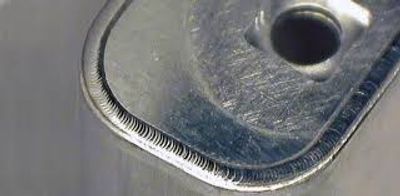
example components

Laser Welded Barb Assembly
Hypodermic Needle to Ferrule Laser Weld
Laser Welded Barb Assembly
Tibbs Arterial Cannula
Hypodermic Needle to Ferrule Laser Weld
Laser Welded Barb Assembly
Critical Measurement Sub-Assembly
Hypodermic Needle to Ferrule Laser Weld
Hypodermic Needle to Ferrule Laser Weld