Precision Laser Cutting Services

Typical Applications
Catheters – Guidewires – Marker bands – Articulating probes – Ring electrodes – Flexible mandrels – Pull-wire assemblies – Delivery systems
Paarl Precision specialises in precision laser cutting of miniature components, thin-wall tubing and complex metal parts for medical devices, scientific instrumentation and advanced engineering applications.
Our laser cutting capabilities are focused on producing highly accurate components from materials including stainless steel, Nitinol, titanium and other specialist alloys. Using advanced laser processing techniques, we manufacture precision-cut hypotubes, medical tubing components and intricate miniature parts requiring exceptional dimensional accuracy, clean edges and repeatable production quality.
Laser cutting provides engineers with the flexibility to manufacture complex geometries, fine features and delicate components that would be challenging to produce using conventional cutting methods. From early-stage prototypes through to production quantities, Paarl Precision supports customers requiring reliable, high-quality laser cut components.
Laser cutting is often one stage within a complete manufacturing solution. Paarl Precision can support customers with additional processes including:
- Laser welding
- Deburring
- Precision machining
- Component assembly
- Inspection
- Finishing processes
Combining multiple manufacturing processes allows customers to develop complete assemblies from initial concept through to finished component manufacture.
Advantages of Precision Laser Cutting
No Dedicated Tooling
Traditional manufacturing methods often require punches, dies or custom tooling before production can begin. Laser cutting eliminates this requirement by working directly from CAD data, reducing setup costs and allowing design changes to be implemented quickly. This makes the process ideal for prototype development, low-volume production and components that evolve throughout the design process.
Exceptional Repeatability
Every component is produced using precisely controlled laser parameters, ensuring consistent dimensions, edge quality and feature accuracy across every production batch. This repeatability is particularly important for medical, scientific and aerospace applications where component consistency is critical.
High-Speed Manufacturing
Laser cutting combines rapid programming with fast processing speeds, enabling components to move from design to production quickly. Reduced setup times and efficient production help shorten lead times while maintaining exceptional quality.
Outstanding Accuracy
The highly focused laser beam enables intricate features to be produced with excellent positional accuracy. Fine slots, small holes, narrow profiles and complex geometries can be manufactured to demanding tolerances that would be difficult or costly using conventional machining methods.
Complex Geometries
Laser cutting offers exceptional design freedom, allowing engineers to create intricate patterns, precision slots, windows, cut-outs and detailed profiles without the limitations imposed by traditional cutting tools. Complex designs can be manufactured directly from CAD data without additional tooling.
Narrow Kerf Width
The laser beam removes only a very small amount of material during cutting, producing a narrow kerf. This maximises material utilisation, allows components to be nested efficiently and enables fine features to be positioned closer together without compromising quality.
Reduced Material Waste
Efficient nesting combined with the narrow cutting width helps minimise material waste, making laser cutting an economical solution for high-value materials such as titanium, Nitinol and specialist stainless steels.
Benefits of Laser Cutting
- High positional accuracy for intricate and miniature components
- Minimal material distortion due to low heat input
- Excellent edge quality with minimal burr formation
- Reduced need for secondary finishing operations
- Ability to manufacture highly complex profiles and fine features
- Rapid prototype development without tooling costs
- Consistent production quality from prototype through to volume manufacture
- Excellent repeatability for regulated and precision industries
- Cost-effective production of both low and medium volume batches
- Fast turnaround times for development and production projects

Materials

Materials We Laser Cut
Paarl Precision laser cuts a wide range of specialist metals used in medical, scientific and advanced engineering applications. Material selection depends on the mechanical, thermal and environmental requirements of the final component.
Materials commonly processed include:
- Stainless steel including 304 and 316 grades
- Nitinol
- Titanium
- Nickel alloys
- Cobalt-chrome alloys
- Other specialist engineering materials
Each material requires optimisation of laser parameters including power, speed, focus and cutting strategy to achieve the required edge quality, dimensional accuracy and surface finish.
Precision Laser Cutting Capabilities
Paarl Precision uses precision laser cutting technology to manufacture complex components where accuracy, repeatability and minimal material distortion are critical. Our process is particularly suited to miniature components, thin-walled tubing and applications requiring fine features and controlled cutting performance.
Components can be manufactured directly from customer CAD data, allowing rapid design development, efficient prototyping and repeatable production without the need for expensive tooling.
Tube laser cutting
Tube Laser Cutting

Flexible nitinol wires pass through a rigid precision stainless steel tube to enable articulation of the tube end. This in turn allows surgery to take place around corners as the straight tube which is inserted into the end of the keyhole instrument turns into a hook at its end.
Should a more sophisticated steerable approach to the working site be required, there are alternative approaches to assembly, including the use of tube laser cutting, or a by welding or induction vacuum brazing a separate, more flexible nitinol tube to the end of the rigid stainless tube.
Ring Electrodes
Stainless steel electrodes are cut to micron precision, allowing copper-based conducting wires to subsequently be laser welded to the electrode itself.
Thin Walled Tubes
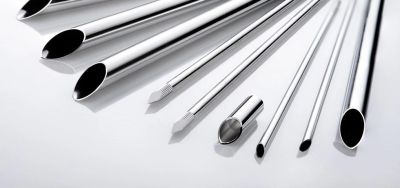
Cutting thin wall tubing using conventional methods can result in deformation, burr formation or dimensional inaccuracies. Precision laser cutting eliminates many of these challenges by using a highly focused beam to produce clean, accurate cuts with minimal mechanical stress. This makes the process particularly suitable for delicate components used in medical devices, scientific instruments, sensors and miniature mechanical assemblies.
Hypodermic tube
Hypodermic tube

Paarl Precision specialises in the precision laser cutting of hypodermic tubing for medical, scientific and advanced engineering applications. Laser cutting enables intricate features, precision slots, windows and complex profiles to be produced without deforming the tube, making it ideal for components where dimensional accuracy and edge quality are critical. Our process supports both prototype development and production manufacturing using a range of stainless steel and specialist alloy tubing.
Catheter tubing
Hypodermic tube
Catheter tubing
Laser cutting is widely used in the manufacture of catheter components, where precision and consistency are essential. Our process allows complex patterns and fine features to be cut into thin-walled tubing with minimal heat input, helping to maintain the mechanical properties of the material while achieving the tight tolerances required for minimally invasive medical devices. We work closely with customers to develop cutting solutions that meet demanding design and performance requirements.
Micro tubing
Hypodermic tube
Catheter tubing
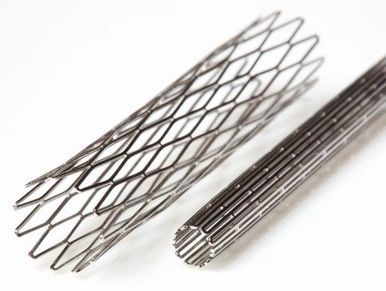
Micro tubing presents unique manufacturing challenges due to its small diameter and thin wall thickness. Our laser cutting capabilities enable intricate features to be produced with exceptional precision while maintaining concentricity and dimensional stability. Whether manufacturing miniature medical components, analytical instrumentation or custom-engineered assemblies, Paarl Precision delivers reliable, repeatable results for even the most demanding micro-scale applications.
Flat Component Cutting
Shims
Medical components
Washers
Precision laser cutting provides an efficient and accurate method for manufacturing shims in a wide range of materials and thicknesses. Components can be produced directly from CAD data with exceptional dimensional accuracy, making laser cutting ideal for custom shim designs, prototypes and production quantities. The clean edge quality achieved by laser cutting often reduces the need for secondary finishing before assembly.
Washers
Medical components
Washers
Laser cut washers offer excellent dimensional consistency and repeatability across prototype and production batches. From simple flat washers to complex sealing and spacing components, laser cutting enables a wide variety of internal and external profiles to be manufactured quickly and accurately without the need for dedicated tooling. This flexibility allows custom washer designs to be produced efficiently with short lead times.
Medical components
Medical components
Medical components
Thin-wall stainless steel tubes and hypodermic tubes can be precisely and cleanly cut to length by laser cutting. Whilst abrasive wheel cutting and electrochemical cutting are generally more economic, they are less successful then laser cutting for short tube lengths (below 3mm) and for very precise cutting with low kerf widths. This is where laser cutting becomes the preferred tube cutting method.
Sensor parts
Electronic components
Medical components
Modern sensors often incorporate miniature metallic components with intricate geometries and tight dimensional requirements. Precision laser cutting enables fine features to be produced accurately while maintaining excellent edge quality and repeatability. Our manufacturing capabilities support sensor applications across scientific research, industrial automation, analytical equipment and aerospace industries.
Electronic components
Electronic components
Electronic components
Laser cutting is well suited to the manufacture of precision electronic components, shielding elements, contact parts and miniature metallic assemblies. The process enables fine details and complex profiles to be produced without introducing significant mechanical stress, helping to maintain component integrity while achieving the high levels of accuracy required for modern electronic systems.
Complex Profiles
Slots
Windows
Windows
Laser cutting enables narrow slots and precision openings to be produced with exceptional accuracy, even in thin-walled tubing and miniature components. Slot dimensions, spacing and geometry can be precisely controlled, making the process ideal for medical devices, fluid control systems, sensors and other applications where consistent performance depends on precise feature dimensions.
Windows
Windows
Windows
Precision laser cutting allows intricate window features to be incorporated into tubes and flat components without compromising dimensional accuracy. These windows may be used for fluid delivery, sensing, inspection or mechanical engagement, and can be manufactured in a wide variety of shapes and sizes to meet specific design requirements.
Holes
Windows
Micro features
From micro-holes to larger precision openings, laser cutting provides excellent positional accuracy and edge quality across a broad range of materials. Hole patterns can be integrated into complex component designs with minimal additional manufacturing time, allowing efficient production of parts requiring multiple precision features.
Micro features
Intricate geometries
Micro features
Many advanced engineering applications require features measured in fractions of a millimetre. Our precision laser cutting technology enables the production of extremely small slots, holes, notches and intricate details while maintaining excellent repeatability and dimensional control. These capabilities are particularly valuable for medical devices, scientific instrumentation and high-performance engineering components.
Intricate geometries
Intricate geometries
Intricate geometries
Laser cutting offers exceptional design freedom, enabling highly complex geometries to be manufactured directly from CAD data without the limitations of conventional machining or mechanical cutting. Curved profiles, lattice structures, fine contours and intricate patterns can be produced accurately and consistently, allowing engineers greater flexibility when developing innovative products and precision components.
Upcoming Events
Join us for upcoming events, from community gatherings to special sales. We can't wait to see you there.
Sunday Supper Club
Every Sunday
Evenings in the Park
First Friday of the Month
Morning Brews & Views
Every Saturday
